From the Desk of Danny Cohn
October 16, 2026
Shabbat Shalom!
Summer brings with it one of the great loves of my life: watermelon.
When I was a little boy growing up in Omaha, Saturday evenings often ended around my Grandma Rose’s bright yellow kitchen table. She would stop by Sherman’s Bakery for fresh pletzel (onion rolls), pile them high with kosher salami and yellow mustard, and serve them alongside the sweetest watermelon she could find, even taking the time to pick out every little black seed for my brother and me.
Looking back, I realize we were spoiled.
To this day, I can close my eyes and remember the smell of that kitchen, the laughter around the table, and the unmistakable taste of those summer meals. If I could have five more minutes with my grandmother, that is where I would choose to spend them.
Last weekend, I found myself craving watermelon. Since Andrew was headed to the grocery store, I asked him to pick one up. He returned home carrying a pre-cut section wrapped in plastic.
Now, Andrew has many remarkable qualities. He’s a wonderful husband, an incredible father, a loyal friend, and a true balabusta in the kitchen.
But a pre-cut watermelon?
That simply wouldn’t do.
So, after dinner, Nora and I headed to the grocery store to find the right one.
As I examined watermelon after watermelon, Nora grew increasingly impatient.
“Abba,” she finally asked, “why can’t we just take the first one?”
“Because” I replied, “it’s not the watermelon.”
Then came the inevitable follow-up.
“How do you know which one is the watermelon?”
Without missing a beat, I answered, “Grandma Rose taught me.”
That was enough.
Grandma Rose is legendary in our home. Nora has grown up hearing stories about her, and one of my most treasured possessions is a photograph of Grandma Rose and her siblings that hangs in our dining room. So, Nora accepted my answer without question, and together we found the perfect watermelon.
One day I’ll tell her the whole story.
I’ll tell her that Grandma Rose’s father arrived in Omaha from Poland with little more than hope. To support his young family, he became a fruit peddler. His livelihood depended on selecting the ripest fruit in town. Every peach, every apple, every watermelon reflected his integrity. Quality wasn’t just good business it was how he fed his family and built a reputation.
After his untimely passing, Grandma’s brother entered the grocery business to help support the family. Once again, choosing the very best fruit wasn’t simply a skill. It became part of our family’s identity.
It occurred to me later that evening that what I passed along to Nora wasn’t really about watermelon.
It was masorah.
The Hebrew word masorah means “tradition,” but not tradition in the sense of simply preserving old customs. Masorah is the sacred act of passing something meaningful from one generation to the next. It is how Judaism has survived for thousands of years not only through Torah scrolls and prayer books, but around kitchen tables, family recipes, songs, stories, and yes…even knowing how to pick the perfect watermelon.
The Torah commands us, V’shinantam l’vanecha “You shall teach them diligently to your children”. Our sages understood that this commandment extends far beyond formal learning. We teach every day through the stories we tell, the habits we model, the values we live, and the ordinary moments we choose to make extraordinary.
Not every family’s inheritance is silver candlesticks or treasured heirlooms.
Sometimes it’s knowing how to braid challah.
Sometimes it’s the melody of Kiddush.
Sometimes it’s remembering your grandmother’s soup recipe.
And sometimes it’s knowing exactly which watermelon to choose.
Every Friday night, when we gather around our own table, I realize that Judaism isn’t only preserved in our synagogues. It is preserved in kitchens, around dinner tables, and in the quiet moments when one generation teaches the next not just how to choose the right watermelon, but how to choose the right way to live.
This Shabbat, I hope you’ll spend a few moments reflecting on the traditions that found their way into your life. What was served on your grandparents’ table? What expressions did they use? What values did they embody without ever speaking them aloud? What have you inherited that deserves to be passed on?
These are more than family memories. They are the threads that make up the story of our St. Louis Jewish community.
As part of Federation’s 125th anniversary, we will be collecting our community’s stories in the coming months. We want to hear the stories that shaped you and your family: the recipes, rituals, songs, photographs, objects, journeys, memories, and moments that connect one generation to the next. We want to capture the stories of grandparents and great-grandparents, of newcomers and lifelong St. Louisans, of Shabbat tables and summer camps, of synagogues, schools, agencies, friendships, hardships, celebrations, and quiet acts of Jewish life that might otherwise go untold.
In the coming months, you will see opportunities to participate and share your own story. I hope you will. Whether your story is big or small, funny or tender, recent or generations old, it is part of the sacred inheritance we are responsible for carrying forward.
Because the greatest inheritance we leave our children isn’t found in our wills.
It’s found in the stories they will someday tell about us.
And since I can’t end without revealing Grandma Rose’s secret …
Look for a watermelon that’s round. The rounder, the better. Find one with a small stem scar. Avoid large white patches on the outside. And always pick the heaviest one for its size.
Trust me.
It has been generations in the making.
May your Shabbat be as sweet as the best summer watermelon, filled with memories that nourish your soul, traditions worth preserving, and the blessing of adding your own chapter to the story that began long before us and, God willing, will continue long after us.
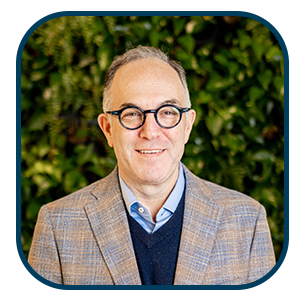 Shabbat Shalom,
Danny Cohn
President & CEO
Jewish Federation of St. Louis