From the Desk of Danny Cohn
October 16, 2026

Shabbat Shalom,
I remember the first time I encountered the Ten Commandments. I was seven years old in Omaha, sitting with my family during services and looking up at a metal work of art above the ark. It was elevated, permanent, and awe-inspiring. The second was on a much larger screen, watching The Ten Commandments, in my grandparents’ house in Cheyenne, Wyoming (yes, there are Jews in Wyoming) unfold in dramatic fashion, complete with thunder, fire, and Charlton Heston. In both places, the message was clear: these words mattered. They were meant to be seen, remembered, and carried with us.
This week we read Parashat Yitro, a moment unlike any other in our collective story. Standing at the foot of Mount Sinai, our ancestors experience revelation and receive the the Ten Commandments. It is a scene of awe and trembling, but also one of clarity and purpose.
What is striking is not only what is given at Sinai, but when. The Ten Commandments come before the fullness of Torah law, before centuries of interpretation and detail. Until that moment, we were governed by what might seem like non sequiturs – episodes of wandering, struggle, covenant, and improvisation. We were becoming a people before we fully understood the rules that would guide us. Sinai marks the shift from survival to responsibility, from a shared past to a shared moral future.
I often think about this moment at Sinai through a very personal lens as a parent. As Andrew and I raise our daughter, Nora, we are constantly aware that long before she understands every “rule,” she is absorbing our values. She is watching how we treat others, how we respond to injustice, how we show gratitude, and how we take responsibility for the world around us. In many ways, that is Sinai in miniature: values first, explanations later.
The Ten Commandments are not merely laws; they are a binding force. They articulate how we relate to God and to one another and how holiness shows up in daily life. They remind us that freedom without values is fragile, and that community without responsibility cannot endure. From honoring parents to protecting human dignity, from speaking truth to rejecting harm, these commandments shape not only who we are, but how we raise the next generation.
One of the ways we try to make these teachings tangible for Nora is through tzedakah. Not as charity, but as justice, an obligation, not an option. We want her to know that giving is not about surplus, but about responsibility; not about generosity alone, but about partnership in building a more caring world. This is the same spirit that animates our Jewish community and the work of the Jewish Federation of St. Louis every day.
Fast forward to today, and the power of Sinai still resonates. In a complex and often fractured world, the Ten Commandments continue to bind us as Jews across generations, denominations, and differences. Here in St. Louis, we see these values lived out daily through acts of chesed, through communal responsibility, and through showing up for one another in moments of joy and challenge alike.
This Shabbat, may we hear the call of Sinai anew, not as distant thunder, but as a living charge. Let us continue raising children who know their values, strengthening a community rooted in responsibility, and turning our shared principles into action. Together, through our choices, our giving, and our leadership, we can ensure that the values we inherited are the values we pass on stronger, more vibrant, and enduring for generations to come.
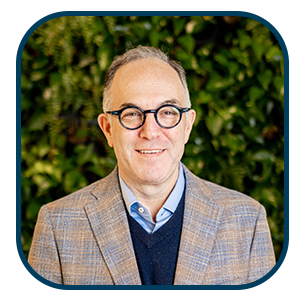
Shabbat Shalom,
Danny Cohn
President & CEO
Jewish Federation of St. Louis